
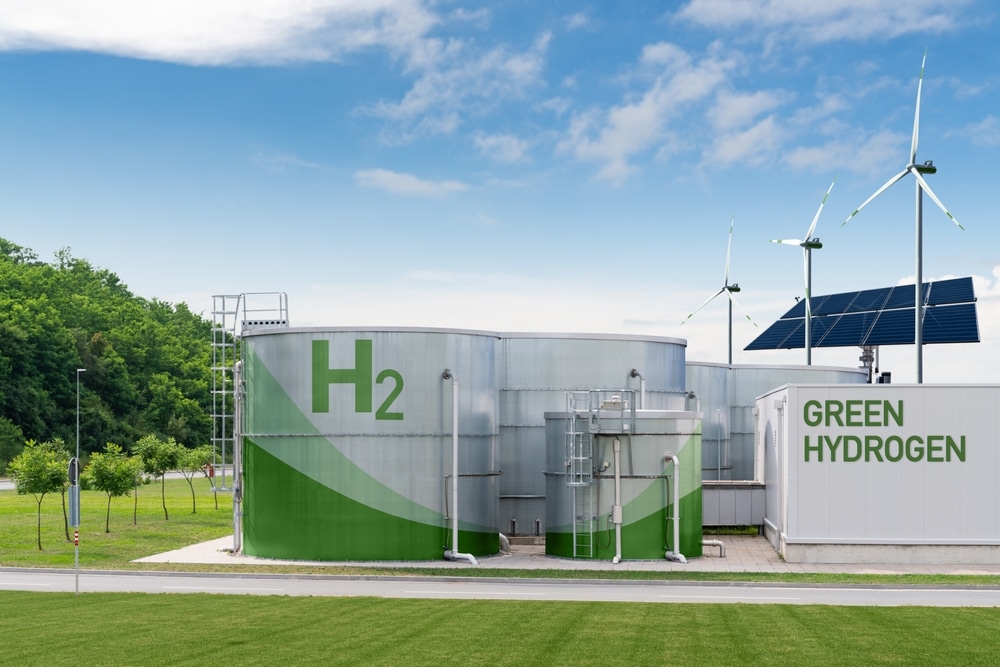
As the world transitions toward cleaner energy systems, green hydrogen has emerged as a key solution for decarbonization. At the heart of this technology are electrocatalysts—materials that accelerate the electrochemical reactions needed to split water into hydrogen and oxygen. One of the most impactful advancements in this field is the design of nanostructured electrocatalysts, which can significantly enhance performance at multiple levels.
Momentum Materials is at the forefront of developing advanced materials that leverage nanoscale engineering to improve efficiency and durability in hydrogen production systems.
What Are Nanostructures?
Nanostructures refer to materials engineered at the nanometer scale, typically between 1 and 100 nanometers. At this scale, materials exhibit unique physical and chemical properties that differ from their bulk counterparts.
Common types of nanostructures used in electrocatalysis include:
- Nanoparticles – tiny particles with high surface area and high active-site exposure
- Nanofibers – elongated structures that enhance conductivity and improve structural connectivity
- Nanosheets – ultra-thin layers that can increase surface expose
These nanostructures provide a foundation for designing catalysts that are more reactive, efficient, and adaptable to demanding electrochemical environments.
Enhanced Electron and Ion Transfer at the Nanoscale
Electrocatalytic performance depends not only on the catalyst chemistry, but also on how effectively electrons and ions move through the catalyst layer. Efficient electron and ion movement is essential for electrochemical reactions, particularly in water splitting processes.
Within well-designed nanostructures:
- Shorter electron and ion transport pathways reduce resistance
- Increased surface area provides more active reaction sites
- Improved contact between the catalyst and the reactant enhances charge transfer
These factors collectively enable faster and more efficient reactions. For hydrogen production, this means higher output with lower energy input—an essential requirement for scalable green hydrogen systems.
Momentum Materials designs nanostructured materials that optimize these electron and ion pathways, ensuring consistent and high-performance catalytic activity.
Stability Under Harsh Electrochemical Conditions
Electrocatalysts used in green hydrogen production must operate under highly demanding conditions, including:
- High voltage fluctuations
- Acidic or alkaline environments
- Continuous operation over long periods
Carefully engineered nanostructures can:
- Distribute mechanical stress more evenly
- Preserve particle dispersion
- Maintain structural integrity over time
For example, nanofibers can form interconnected networks that reinforce the catalyst structure, reducing degradation during operation.
Momentum Materials focuses on creating durable nanostructured catalysts that maintain performance even in extreme electrochemical environments.
Role in Hydrogen and Oxygen Evolution Reactions
Green hydrogen production relies on two key electrochemical processes:
- Hydrogen Evolution Reaction (HER)
- Oxygen Evolution Reaction (OER)
Both reactions require highly efficient catalysts to proceed at practical rates.
Nanostructured electrocatalysts can enhance these reactions by:
- Increasing the number of accessible active sites
- Facilitating faster ion and electron transport
For OER in particular, advanced materials such as Iridium Catalyst are widely used due to their exceptional activity and stability. When combined with nanostructuring techniques, these catalysts can achieve even greater efficiency, making them ideal for proton exchange membrane (PEM) electrolyzers.
Momentum Materials develops high-performance catalysts tailored for both HER and OER applications, supporting the advancement of green hydrogen technologies.
Real-World Benefits of Nanostructured Electrocatalysts
The integration of nanostructures into electrocatalysts delivers several practical advantages:
- Higher efficiency in water-splitting reactions
- Reduced energy consumption for hydrogen production
- Extended catalyst lifespan under continuous operation
- Lower material costs through improved utilization of active components
These benefits are critical for scaling green hydrogen production and making it economically viable across industries.
Momentum Materials continues to innovate in this space by designing materials that balance performance, durability, and cost-effectiveness.
The Future of Nanostructured Catalysis
As research in nanotechnology advances, the potential for further improvements in electrocatalyst performance continues to grow. Emerging approaches include:
- Multi-functional nanostructures with combined properties
- Hybrid materials integrating different nanoscale components
- Precision engineering of surface chemistry at the atomic level
These innovations are expected to drive significant progress in hydrogen production technologies, accelerating the global shift toward sustainable energy.
Momentum Materials remains committed to advancing nanostructured electrocatalysts, helping enable the next generation of clean hydrogen solutions.
Contact Us Today
Nanostructures play a transformative role in improving electrocatalyst performance for green hydrogen production. By enhancing electron transfer, increasing active surface area, and improving stability under harsh conditions, nanostructured electrocatalysts offer a powerful pathway to more efficient and durable systems.
From hydrogen evolution to oxygen evolution reactions, nanoscale engineering unlocks new levels of performance that are essential for the future of clean energy. Momentum Materials continues to lead in this field, delivering advanced materials that support the growth and scalability of green hydrogen technologies. Contact us today to learn more about our nanostructured electrocatalysts and how they can improve your hydrogen production processes.